There are food brands that people discover.
And then there are food brands that people grow up with.
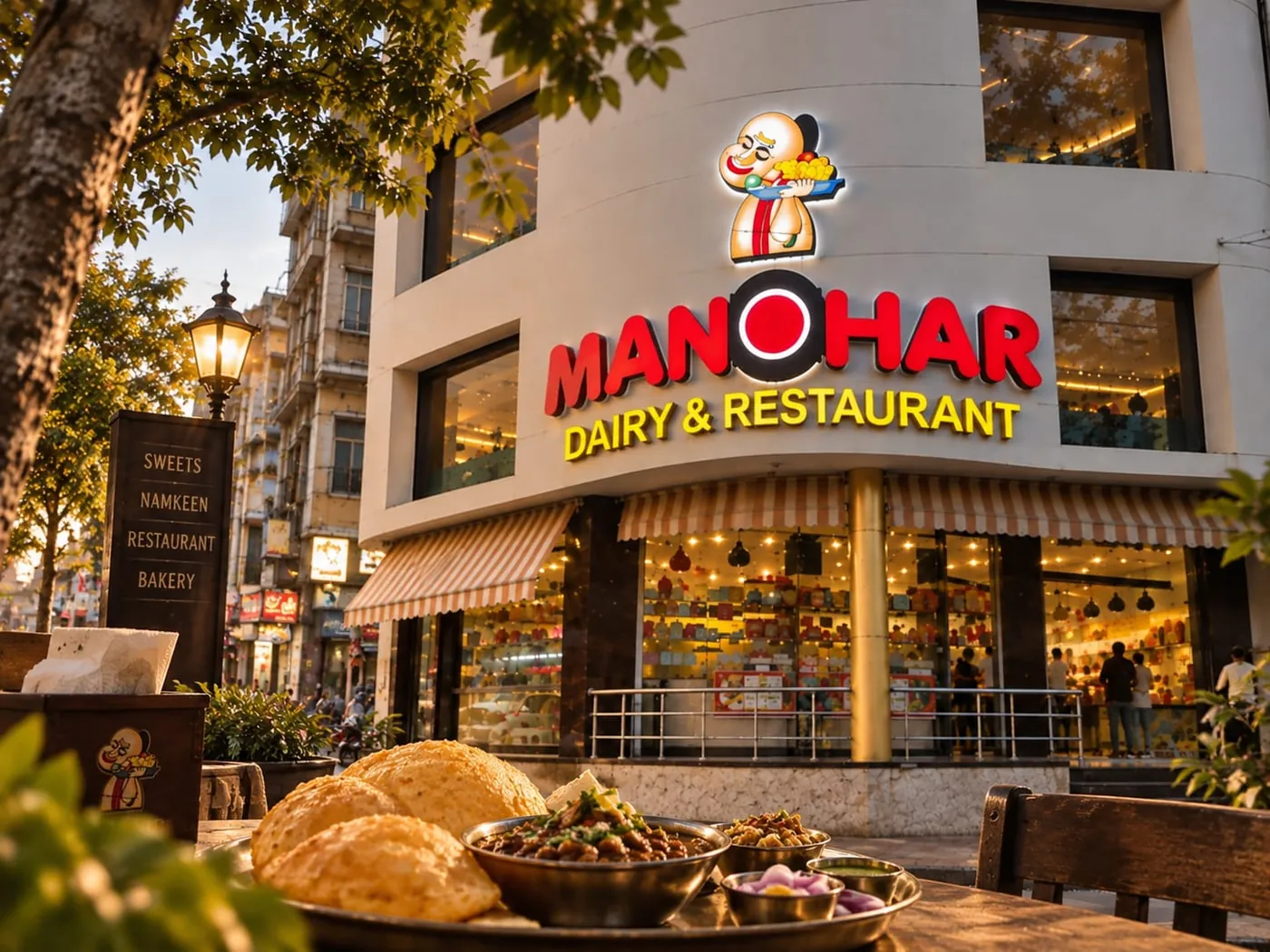
In Bhopal, Manohar Dairy belongs to the second category.
For generations, the name has been part of the city's food culture — from sweets and savouries to Indian food and bakery products. But behind the familiar name is a family story that goes back to 15 April 1970, when Late Shri Shyam Sundar Harwani started Manohar Dairy and Restaurant on Hamidia Road. What began with dairy products gradually moved into sweets and restaurant food.
More than five decades later, the interesting question is no longer how Manohar built its name.
"The real question is: How does a family business keep a legacy alive when the people, technology and expectations around it have completely changed?"
That is where the next generation comes in.
It Started With A Simple Idea
In 1970, the idea behind Manohar was straightforward — build a dairy and restaurant business that could give Bhopal food worth remembering.
The first outlet was established on Hamidia Road, initially focusing on dairy products. Over time, the business moved into sweets, savouries and restaurant food. The change was gradual. And perhaps that is an important part of Manohar's story: it was never only about selling one product; it was about understanding what people wanted to eat next.
That ability to adapt became critical when the second generation stepped in.
The Second Generation: Manohar Harwani and Murli Harwani
After the passing of founder Shyam Sunder Harwani in 1978, the responsibility of carrying the business forward moved to his sons, Shri Manohar Harwani and Shri Murli Harwani. According to Manohar's own account, the brothers expanded the offering and introduced a wider variety of contemporary dishes.
This was an important shift. The business was no longer simply a dairy operation. It was becoming a food brand.
Then The City Changed
Bhopal changed too. New neighbourhoods developed. Eating habits changed. Families began looking for different dining experiences. Restaurants became more than places to eat. And eventually, technology completely transformed how people discover food.
A customer who once heard about Manohar through family or friends can now discover it through a screen. A customer who once had to visit a store can now order from home. A product that once had to be explained by the person behind the counter can now be introduced through a photograph, a video or a social media reel.
For a legacy brand, this creates both an opportunity and a challenge:
The opportunity is reach. The challenge is relevance.
Enter The Next Generation
This is where the third-generation conversation becomes interesting. A younger generation does not inherit the same market their grandparents or parents operated in. They inherit the name, but they also inherit a very different customer.
Today's customer wants convenience, visibility, consistency and something that feels relevant to their lifestyle:
They may still love the mithai their family has been buying for years, but they also want modern packaging.
They may still sit down for a traditional meal, but they discover the place through Instagram first.
They may have grown up eating Manohar, but the next customer might be discovering it for the first time on a delivery app.
For the third generation, modernising Manohar therefore cannot simply mean making it look younger. It means understanding why people still care about the brand — and finding new ways to make that connection.
From A Shop In Bhopal To A Scaled Brand
Manohar's official history says the brand now manufactures more than 250 products every day across sweets, savouries, Indian fast food and bakery. That scale changes the nature of the business entirely.
Consistency becomes important. Operations become important. Packaging becomes important. Technology becomes important. And the brand story becomes important too.
Because once a business reaches multiple generations, its story becomes part of the product. When someone buys from Manohar, they are not only buying a sweet or a snack. For one customer, they are buying a childhood memory. For another, it is simply a convenient order placed online. The brand has to make room for both.
"The first generation asks: Can we build something people will trust? The second generation asks: Can we grow what we have built? The third generation faces a different question: Can we make this legacy meaningful to people who did not experience its beginning?"
The Real Meaning Of “Modern”
At Beyond the Menu, we believe modernisation in food is not always about changing the food. Sometimes it is about changing the way people experience it.
A traditional sweet can remain exactly what it has always been while the packaging around it becomes more practical. A familiar restaurant can retain its culinary identity while refining its digital presence. A family-owned business can maintain its values while adopting professional systems. That is the kind of modernisation that does not fight the past — it builds on it.
What Should Never Change?
For a business that has crossed five decades, this is the most critical question. Not “What can we change?”, but “What should we never change?”
For Manohar, the answer is closely connected to the trust created over generations. The brand's own story repeatedly places emphasis on quality, purity and its relationship with customers, describing patrons as family.
Everything around it can evolve: the way people order, the packaging, the digital communications, even the store design. But if the core reason people trusted Manohar disappears, modernisation loses its purpose.
For Shyam Sunder Harwani, it began with a dream of building a dairy and restaurant in Bhopal. For Manohar Harwani and Murli Harwani, it meant taking that foundation into sweets, snacks and restaurant food and building the business further.
For the generation carrying the brand forward today, they have to make a 1970 idea work in a 2026 world: bridging the customer who remembers Manohar with the customer meeting it for the first time.
Beyond the Menu's Take
What makes family-run food businesses fascinating is that their biggest asset is often something that cannot be measured on a balance sheet — memory.
Manohar Dairy has spent decades becoming part of Bhopal's food story. The next chapter will be about making sure that story does not end with the generation that created it. It moves forward, changes, learns, and continues to give people a reason to return.
Because the real test of a legacy is not how long it has existed. It is whether the next generation can make people care about it all over again.